
Close your eyes for a second.
Imagine you've just traveled back over 350 years. It's the 1660s. You find yourself in England, standing beside a young scientist named Isaac Newton.

The dawn of the Scientific Revolution
The world around you is changing.
Apples fall from trees. The Moon moves across the night sky. Planets orbit the Sun. Rivers flow.
Everything is moving. Everything is changing.
Newton turns to you and asks...
"Can we measure change itself?"
Not where something is. Not where it will be. But... how fast is it changing at this exact moment?
You both spend days thinking. You try measuring the distance a horse runs every hour. That works. Then every minute. Even better. Then every second. Better still.
But Newton smiles and asks one more question.
"What if I want to know how fast it's moving... at THIS exact instant?"
Suddenly, everything stops. You can't divide by zero time. You can't wait for one second to pass because the moment is already gone. It seems impossible. This mathematical puzzle was the birth of calculus.
The Discovery: Isaac Newton and the Mathematics of Change
Just when it seems impossible, Newton has an idea. "What if we make the time interval smaller... and smaller... and smaller... until it becomes almost zero?"
Not zero. Just unimaginably close.
That single idea changed mathematics forever. That idea became what we now call... The Derivative.
The Great Rivalry: Newton vs. Leibniz in Calculus
But here's where the story becomes even more interesting. While Newton was developing this mathematical framework in England, someone else was having the exact same realization.
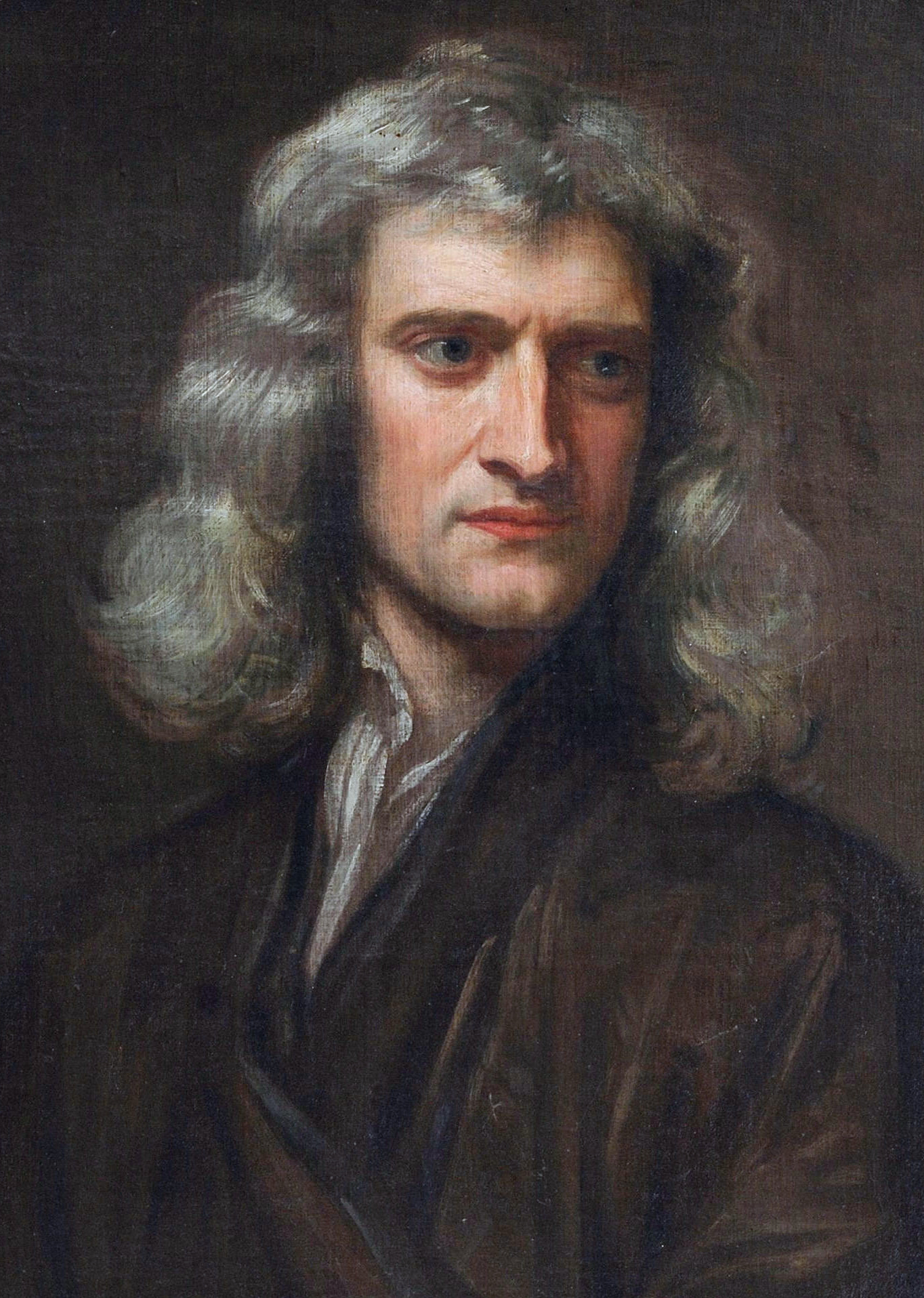
Isaac Newton
Working in England on the mathematics of motion and gravity.
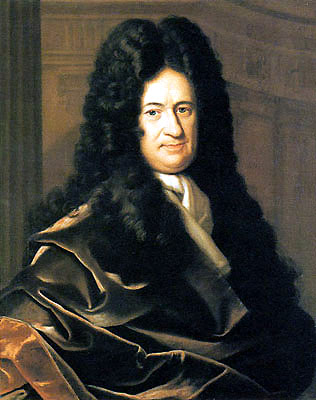
Gottfried Leibniz
A German mathematician working on almost the exact same mathematical problem.
Neither knew what the other was doing. Two people. Two different countries. One incredible discovery. It eventually led to one of the biggest priority disputes in the history of mathematics: Who discovered calculus first?
People argued about it for decades. Today, historians generally agree that both independently developed calculus, although in different ways and for different purposes.
So... What Exactly Is a Derivative?
Forget the complex formulas for a minute. A derivative answers one simple question:
"How quickly is something changing right now?"
That's it. Everything else is just the mathematics that helps us answer that specific question about the instantaneous rate of change.
Real-World Example 1: Speed and Instantaneous Rate of Change

If your average speed is 80 km/h, what is your exact speed at this specific millisecond?
You're driving a car. After one hour you've driven 80 km. Your average speed is 80 km/h. Easy. But imagine a police officer asks, "How fast were you going at exactly 2:13:45 PM?"
Not over an hour. Not over a minute. At that exact instant. That is exactly what a derivative measures. It tells you the instantaneous rate of change.
Real-World Example 2: The Slope of a Mountain

Imagine climbing a mountain. Sometimes the path is almost flat. Sometimes it's incredibly steep. Sometimes it slopes downward. In calculus, the derivative tells you exactly how steep the mountain is at the exact spot where your foot is planted.
The Hidden Superpower: Applications of Derivatives
Derivatives aren't just about speed. They're about change. And change is everywhere. Whenever something changes in the real world, a derivative can mathematically describe it.
The Mathematics Behind Derivatives Explained
Suppose you have a mathematical equation. Let's look at how the math actually works in practice:
If x = 2, then y = 4.
Increase x a tiny bit. The value of y changes.
The derivative tells us how fast y changes compared to x.
> At x = 1, the slope is 2.
> At x = 3, the slope is 6.
> At x = 10, the slope is 20.
// The larger x becomes, the faster x² grows.






The Big Takeaway
The derivative isn't just another topic in mathematics.
It was humanity's answer to one of the oldest questions ever asked: "How do we measure something that never stops changing?"
Once Newton and Leibniz found that answer, they gave us a language that could describe motion, growth, nature, engineering, economics, and countless other fields.
And that's why, more than 350 years later, students all over the world are still learning about derivatives—not because it's just another formula, but because it is one of the most powerful ideas ever created.